
Monette Farms: Scaling Modern Agriculture
When you look at the immense pressure on global food systems and the sheer scale of global food production, Monette Farms stands out as a prime example of massive agricultural expansion and pure operational efficiency. We are looking at a highly coordinated, multi-state, and cross-border farming powerhouse that completely redefines what a family-founded agricultural enterprise can achieve in a highly competitive global market. The core thesis here is straightforward: understanding exactly how this entity operates gives you a perfectly clear window into the future of global agribusiness, modern heavy logistics, and large-scale crop management. You might quickly wonder how a single enterprise effectively manages hundreds of thousands of acres across different countries without losing control of the granular agronomic details. The definitive secret lies in a relentless pursuit of advanced technological integration, strategic land acquisition across diverse climates, and a highly varied crop portfolio designed specifically to mitigate financial risk. From the freezing, short-season plains of northern Canada to the arid, heavily irrigated climates of the American Southwest, their total operational footprint is undeniably staggering. By thoroughly examining their precise methods, you get a reliable, repeatable blueprint for modern agronomy. This goes far beyond simply planting seeds in the dirt; it is a meticulously planned logistical ballet involving heavy machinery fleets, live satellite data telemetry, and high-level commodities trading.
The primary advantage of an operation like Monette Farms is the absolute ability to leverage massive economies of scale to maximize total crop output while simultaneously minimizing per-acre input costs. Managing vast tracts of land strictly across multiple jurisdictions requires a highly structured approach to labor, resources, and liquid capital. The specific value proposition here relies heavily on two distinct examples of scale. First, immense bulk purchasing power allows them to actively secure thousands of tons of premium seed, synthetic fertilizer, and agricultural chemicals at significantly lower wholesale rates than smaller regional competitors could ever hope to negotiate. Second, their remarkably wide geographical diversification effectively means that a localized drought, a severe hail storm, or an early frost in one specific region will absolutely not wipe out their entire annual revenue stream for the fiscal year.
Read also: Robin Hood Bay Dump: Complete Waste Management Guide; Stephenville International Airport Complete Guide.
Let us look closely at the foundational pillars that make this complex system function smoothly on a daily basis. Managing such a sprawling enterprise strictly requires unwavering adherence to specific operational protocols.
- Aggressive Capital Deployment: Reinvesting annual profits directly into strategic land acquisition, often stepping in quickly when local land market prices dip to expand their contiguous operational acreage.
- Centralized Fleet Management: Moving massive combine harvesters, articulated tractors, and heavy grain carts seamlessly across national borders to strictly follow the naturally shifting harvest seasons.
- Data-Driven Agronomy: Utilizing decades of historical yield mapping data to dictate precise crop rotations year over year, rather than relying on traditional guesswork or outdated localized planting habits.
| Operational Region | Primary Crop Output | Specific Climatic Strategy |
|---|---|---|
| Saskatchewan, Canada | Canola, Spring Wheat, Lentils | Advanced dryland farming techniques, heavily utilizing frost-resistant short-season seed strains. |
| Montana, USA | Hard Red Winter Wheat | Aggressive moisture conservation practices, prioritizing massive open acreage utilization to offset lower per-acre yields. |
| Arizona, USA | Alfalfa, High-Value Specialty Crops | Strict mechanical irrigation management, fully leveraging the advantages of year-round continuous growing cycles. |
This highly structured corporate approach allows the enterprise to safely weather intense commodity market fluctuations. When global canola prices drop unexpectedly, the alfalfa or lentil markets might simultaneously surge, providing a highly effective natural financial hedge against extreme volatility. Furthermore, the sheer physical logistics of moving oversized equipment between these distinct climatic zones requires dedicated heavy trucking fleets and intricate logistical planning to ensure expensive machinery arrives exactly as the crops reach their optimal maturity window.
The Humble Origins
The fascinating story of this massive agricultural powerhouse began far smaller than its current multinational footprint might naturally suggest. Originally founded by Darren Monette in the rural heart of Saskatchewan, the enterprise initially started with a relatively modest land base entirely typical of standard Canadian prairie farms. The initial growth strategy focused heavily on maximizing the maximum output yield of traditional northern cash crops like hard red spring wheat and hybrid canola. By intentionally keeping operational overhead remarkably low and focusing intensely on rapid, efficient harvest techniques, the sturdy foundation for a much larger enterprise was firmly set in place. The early days strictly required immense manual labor, incredibly long hours sitting in the cab of a tractor, and a highly hands-on managerial approach to every single aspect of the seasonal growing cycle. Early success was fundamentally built on managing incredibly tight margins and aggressively reinvesting almost every spare dollar straight back into acquiring more productive dirt.
Rapid Evolution and Cross-Border Expansion
As operating capital rapidly accumulated over multiple successful harvest cycles, the overriding business strategy shifted aggressively toward calculated, large-scale expansion. Rather than simply buying up neighboring fields within their immediate home province, the growing enterprise began looking strategically across regional and international borders for cheaper, highly productive land. The major operational jump into the state of Montana represented a massive shift in their overall complexity. Farming extensively in the United States meant navigating entirely different federal regulatory environments, distinct government subsidy structures, and complex foreign labor laws. This distinct era of rapid evolution was heavily marked by the outright acquisition of massive, modern machinery fleets fully capable of harvesting tens of thousands of acres in a matter of mere days. The deeply complex logistics of legally and efficiently moving these massive agricultural fleets back and forth across the US-Canada border quickly became a uniquely defining characteristic of their modern operational model.
The Modern State of Operations
Today, the sheer staggering scale of their overall production is almost entirely industrial in its absolute nature. The enterprise now operates continuously across multiple wildly different climatic zones, stretching directly from the freezing northern prairies all the way down into the scorching desert Southwest regions of Arizona. This massive geographical spread is absolutely not random; it is a highly calculated, heavily researched risk-management strategy. By intentionally operating in entirely different, unrelated weather systems, the enterprise severely insulates its financial bottom line from localized weather disasters like regional floods, unseasonal blizzards, or prolonged droughts. The modern daily iteration of this farm is run much more like a massive multinational logistics corporation than a traditional family homestead, strictly complete with dedicated human resources departments, specialized logistics fleet coordinators, and highly educated agronomy specialists actively analyzing live satellite telemetry every single day.
Precision Agriculture and Telematics
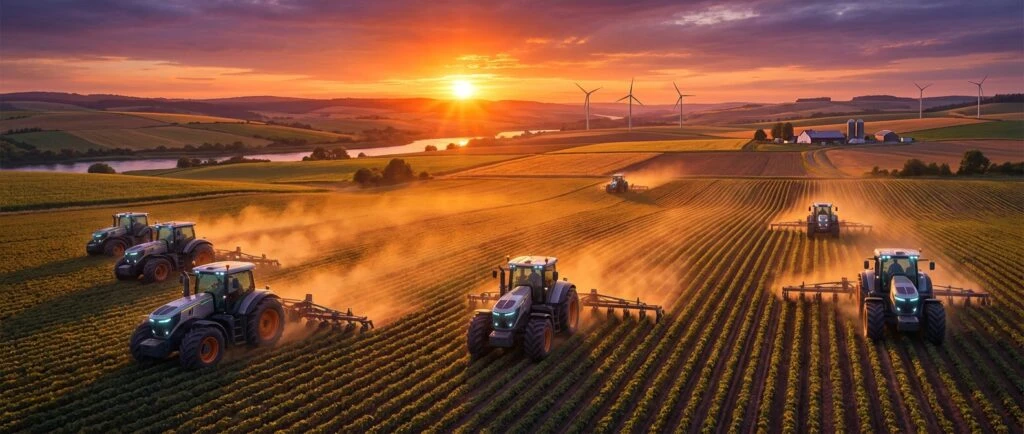
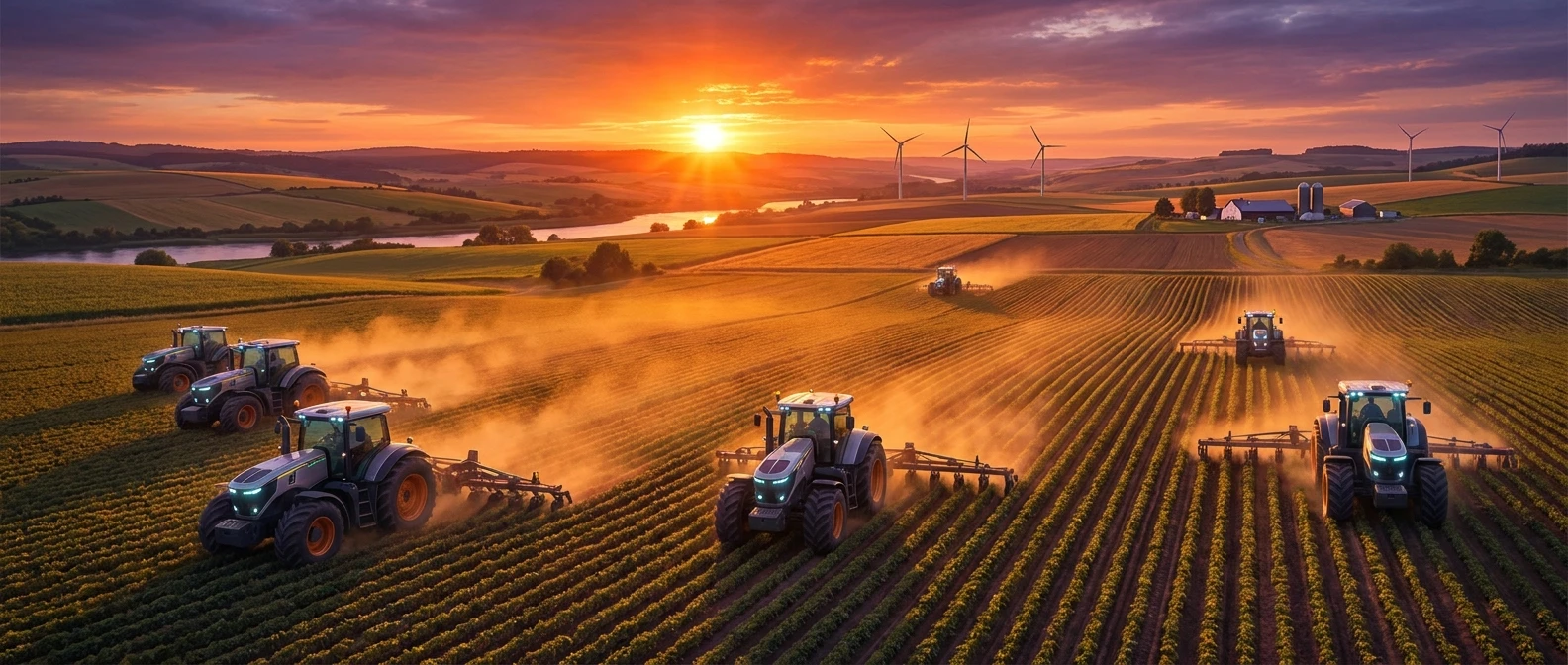
Operating continuously on this massive corporate scale is literally impossible without heavily relying on highly advanced digital technology. Precision agriculture forms the absolute backbone of their daily field workflow. Massive tractors, high-clearance chemical sprayers, and combine harvesters are all explicitly equipped with sophisticated RTK (Real-Time Kinematic) GPS guidance systems. These highly advanced digital systems directly allow for automated steering with sub-inch mechanical accuracy across massive open fields, drastically reducing expensive overlap during critical planting and chemical spraying passes. This extreme mechanical efficiency translates immediately to massive financial savings on diesel fuel, expensive engineered seed, and costly crop protection chemicals. Furthermore, complex wireless telematics systems constantly beam live diagnostic data back to a centralized operational hub, seamlessly allowing remote fleet managers to precisely monitor fuel consumption, engine health parameters, and live crop yield in real-time. If a massive combine harvester working diligently in a Montana wheat field suddenly experiences an unexpected drop in hydraulic pressure, a specialized diagnostic technician sitting hundreds of miles away in Saskatchewan can quickly diagnose the specific issue remotely before a catastrophic, highly expensive mechanical failure actually occurs.
Soil Health and Agronomic Chemistry
Maintaining long-term baseline soil fertility across such wildly varied geographic environments explicitly requires incredibly complex, localized agronomic science. You simply cannot successfully apply a generic, one-size-fits-all granular fertilizer program to specialized fields located in both northern Canada and southern Arizona.
Here are the specific, proven scientific facts currently driving their advanced soil management protocols:
- Variable Rate Technology (VRT): Granular fertilizer is applied highly dynamically based on detailed electrical soil conductivity mapping, ensuring expensive synthetic nutrients only go exactly where the specific soil profile is chemically deficient.
- Nitrogen Fixing Rotations: Strategically utilizing specific broadleaf pulses like green lentils and field peas to naturally restore vital soil nitrogen, drastically reducing their heavy reliance on expensive synthetic anhydrous ammonia applications.
- Moisture Retention Science: Strictly employing zero-till and minimum-till farming practices in highly arid regions to purposefully preserve the delicate topsoil microbiome and physically trap every single millimeter of scarce annual rainfall.
- Advanced Salinity Management: Deliberately using specific genetically adapted crop varieties that naturally tolerate high salt concentrations in the soil profile, which remains a very common agronomic issue in heavily irrigated or chronically dryland agricultural regions.
By consciously treating the soil as a highly complex biochemical financial asset rather than just basic inert dirt, the massive operation maximizes long-term profitability while actively preventing severe, irreversible land degradation.
If you want to clearly understand exactly how a mega-farm effectively scales its daily operations, here is a detailed 7-step actionable blueprint directly modeling their highly successful corporate approach to agriculture.
Step 1: Establish a Highly Solid Baseline
Before attempting to aggressively expand your acreage, you absolutely must perfect the daily operations and logistics on your existing land base. Optimize your historical yield curves, aggressively streamline your daily input costs, and strictly ensure your financial debt-to-equity ratio is stable enough to safely handle the immense burden of aggressive future land expansion.
Step 2: Leverage Maximum Equipment Efficiency
Do not actively let millions of dollars in expensive rolling machinery sit completely idle in a storage shed. The core operational strategy involves buying massive, highly efficient equipment and intentionally running it nearly 24/7 during the critically short planting and harvesting windows to maximize the absolute financial return on your massive capital investment.
Step 3: Diversify Geographically for Risk
Aggressively and strategically acquire productive land in entirely different regional micro-climates. If your primary home base suddenly suffers a devastating seasonal drought, your secondary farming locations actively positioned in different weather patterns can easily carry the financial load for the entire enterprise for that fiscal year.
Step 4: Implement Granular Data Tracking
Stop strictly making expensive agronomic guesses based purely on local tradition. Use advanced digital yield monitors, high-resolution aerial drone mapping, and highly precise grid soil sampling to constantly track the exact profitability of every single acre you actively farm. Cut away the absolute dead weight and double down aggressively on your high-performing geographic zones.
Step 5: Optimize Logistics and Grain Transport
Physically moving millions of bushels of harvested grain and hauling heavy agricultural equipment is just as critical as actually growing the specific crop. Build a dedicated heavy transport truck fleet to efficiently move your expensive machinery between your remote farming regions and haul your stored grain directly to the commercial terminals offering the absolute best local basis contracts.
Step 6: Expand the Overall Crop Portfolio
Do not ever rely entirely on just planting standard wheat or bulk corn. Strategically and deliberately integrate high-value specialty crops, broadleaf pulses, and deep-rooted legumes into your rotation to actively financially hedge against specific commodity market crashes and to naturally improve your long-term soil health through highly varied crop rotation.
Step 7: Adopt Strict Corporate Structuring
You must quickly and decisively transition away from a traditional, localized sole proprietorship mindset to a highly rigid corporate structure. Hire specialized, highly trained talent for human resources, heavy-duty diesel mechanics, agronomy, and high-level commodities trading to properly handle the rapidly increasing operational complexity of a multi-state agricultural operation.
Myth: Corporate mega-farms completely destroy the local soil through aggressive over-farming and total neglect.
Reality: Massive large-scale operations actually rely heavily on advanced soil science, strict continuous no-till practices, and mandatory, varied crop rotation to actively preserve their most valuable financial asset for the extreme long term.
Myth: Traditional family farms cannot ever realistically reach this level of massive multinational scale.
Reality: This exact massive enterprise actually started strictly as a localized family operation and grew rapidly through strategic financial reinvestment and highly aggressive scaling, successfully proving that the standard family model can actively evolve into a corporate agricultural powerhouse.
Myth: Massive agricultural mega-farms only ever plant a single monoculture crop across all their owned land.
Reality: Strict geographical diversification heavily forces a highly varied crop portfolio. They plant literally everything from cold-weather pulses in northern Canada to highly water-intensive specialty crops in warmer southern climates, strictly ensuring continuous, highly varied market engagement.
Who originally founded this massive agricultural enterprise?
Darren Monette officially established the entire farming operation initially in the rural province of Saskatchewan, Canada.
Where exactly are their primary farming locations?
Their massive daily field operations currently span directly across Saskatchewan, Montana, and Arizona.
What specific types of crops do they currently grow?
They grow a highly diverse, rotational mix that primarily includes hard red wheat, hybrid canola, green lentils, field peas, and high-protein alfalfa.
How do they handle and manage their large agricultural equipment?
They actively utilize a highly centralized digital fleet management system and continuously transport heavy harvesting machinery across international borders to perfectly match specific regional harvest times.
Why do they choose to farm in completely different countries?
Cross-border multinational farming naturally mitigates severe localized weather risks and actively leverages completely different international commodity pricing markets.
Do they actively utilize precision agriculture technology?
Yes, sub-inch automated RTK GPS steering, advanced aerial drone mapping, and dynamic variable rate technology are completely standard across all their managed acreage.
How do they specifically handle severe water limitations in arid zones?
They rely exclusively on highly precise mechanical irrigation systems and strict advanced moisture retention science to absolutely maximize their strictly limited water resources.
Is the farming enterprise a publicly traded or private company?
Despite its truly massive multinational scale and heavy corporate structure, it absolutely remains a fully privately held agricultural enterprise.
To effectively wrap up, analyzing Monette Farms means thoroughly understanding the absolute pinnacle of modern agricultural scale and heavy logistics. From their highly precise granular soil chemistry management to their massive cross-border heavy transport network, they perfectly represent the immediate future of global corporate food production. If you want to see exactly how large-scale agribusiness continues to rapidly adapt and evolve, keeping a close eye on their aggressive financial expansion strategies and rapid digital technological adoptions is absolutely essential. Make sure you actively audit your own daily operational efficiencies if you aim to effectively compete in the heavily modernizing agricultural sector today.