
The Phenomenon of the Winnipeg Jets Whiteout
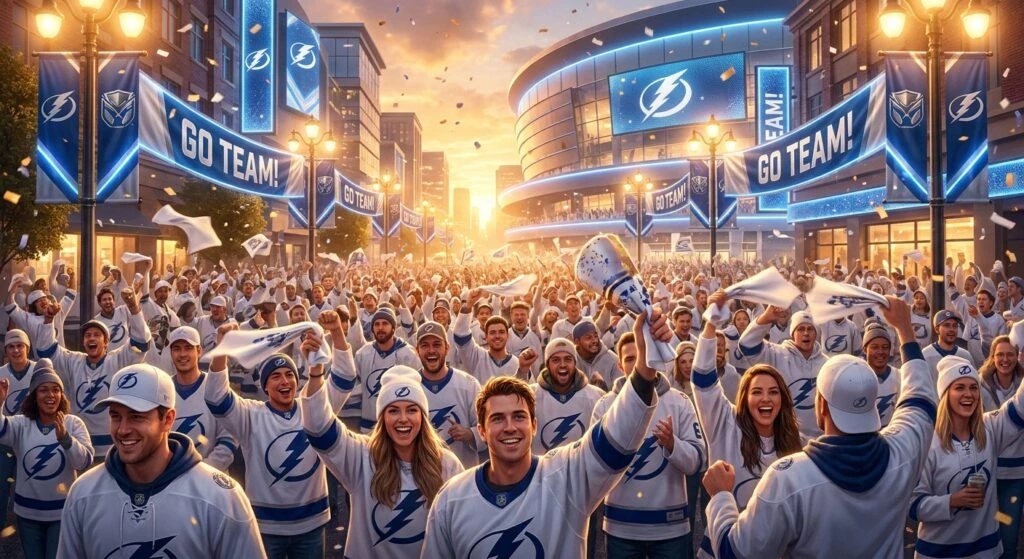
Experiencing a Winnipeg Jets Whiteout is an absolute must for any dedicated hockey fan seeking the pinnacle of playoff atmosphere. From the moment you step near the arena during the Stanley Cup Playoffs, the sheer visual impact of thousands of fans clad completely in white creates a breathtaking spectacle. The Winnipeg Jets Whiteout operates as far more than just a simple color-coordinated wardrobe choice; it is a profound declaration of civic pride, uniting an entire metropolitan area behind their team. When the puck drops, the stands transform into an intimidating, unified wall of white jerseys, waving towels, and deafening roars that rattle the visiting roster.
This massive demonstration of loyalty showcases the intense passion that defines hockey culture in the region. Fans commit entirely to the aesthetic, wearing white face paint, customized jackets, and occasionally even white theatrical costumes to ensure the entire building reflects a single, cohesive theme. The energy generated by this tradition dictates the tempo of the evening, fueling the home team with adrenaline while simultaneously creating a hostile, overwhelming environment for opponents trying to communicate on the ice. It stands as a masterclass in organic fan culture, proving exactly what happens when a community collectively decides to elevate the game-day experience.
Read also: Inside Grande Prairie Hospital: Complete Guide & Key Facts; Meet the GTA 6 Voice Actors Behind the Game.
Understanding the Impact and Value of the Tradition
The mechanics behind this massive fan movement run deep into the core of sports psychology and community building. When a city rallies together with such unified purpose, the benefits extend well beyond the confines of the hockey rink. The visual unity creates an immediate sense of belonging among strangers, turning a massive crowd into a singular, breathing organism dedicated to one goal. It offers immense value to the franchise, the local economy, and the emotional well-being of the fan base.
| Element of the Tradition | Primary Purpose | Real-World Example |
|---|---|---|
| Complete White Wardrobe | Visual uniformity and intimidation | Fans wearing white home jerseys, hoodies, and face paint to blur individual identities into one mass. |
| Spinning Rally Towels | Kinetic energy and distraction | Over 15,000 towels spinning simultaneously during opposing team penalty kills or home team goals. |
| The True North Shout | Auditory dominance and local pride | The entire arena screaming the words True North during the Canadian national anthem, reaching ear-splitting decibels. |
To fully grasp why this specific custom remains so vital to the franchise, you have to look at the tangible advantages it provides during the highest-stakes moments of the season. The tradition delivers a multi-layered impact:
- Unmatched Home-Ice Advantage: The sheer volume and chaotic visual motion disrupt the concentration of visiting players, making it incredibly difficult for them to hear defensive assignments or track the puck in their peripheral vision.
- Massive Economic Stimulation: Downtown businesses, restaurants, and apparel shops experience a massive influx of revenue as thousands of ticketless fans flood the streets to participate in the outdoor viewing parties, purchasing food, drinks, and merchandise.
- Intergenerational Community Bonding: Because the practice dates back decades, parents who participated in the original iterations now bring their children, passing down a localized cultural touchstone that strengthens civic identity across different age groups.
Participating in this sea of white provides a profound rush of adrenaline. It completely redefines the standard spectator experience, demanding active participation rather than passive observation. Every single attendee becomes a crucial component of the atmospheric machinery.
The 1987 Origins Against the Flames
The genesis of this legendary visual display dates back to the 1987 Stanley Cup Playoffs. The Winnipeg franchise was facing off against the Calgary Flames in the first round. Calgary had recently popularized their own fan movement, famously dubbed the C of Red, where their supporters filled the Saddledome in bright red clothing. Realizing they needed a powerful counter-measure to visually match their rivals, local marketing minds and passionate fan groups conceptualized a direct response. They asked everyone attending the home games to wear entirely white clothing. The response was immediate and overwhelming. Fans completely bought into the concept, stripping the arena of any color other than stark white, creating a dazzling and intimidating backdrop that instantly became a hallmark of the city’s playoff identity.
The Evolution Through the 1990s
Throughout the late 1980s and into the 1990s, the tradition continued to grow in the old Winnipeg Arena. The fan base embraced the aesthetic with increasing fervor during every subsequent playoff push. During this era, the atmosphere inside the aging building became legendary across the league. The physical structure of the old arena, combined with the frenzied, white-clad crowd, made it one of the most feared buildings for visiting NHL teams. Even as the original franchise faced financial difficulties and impending relocation, the fans maintained the tradition, using it as a desperate, beautiful display of their dedication right up until the team’s departure in 1996.
The Modern State of the Tradition
When professional hockey returned to the city in 2011, fans eagerly awaited the chance to revive their most famous playoff custom. That opportunity finally arrived during the 2015 postseason. The modern iteration proved even more spectacular than the original. With the advent of high-definition broadcasting and social media, the visual impact of the crowd was broadcast globally, instantly cementing its status as a premier sports spectacle. By the 2018 Western Conference Final run, the phenomenon expanded dramatically beyond the arena doors. Massive street parties began taking over Donald Street, drawing tens of thousands of fans who could not secure arena tickets but still wanted to immerse themselves in the pristine, white-clad chaos, proving the tradition had successfully adapted to a new generation.
The Psychology of Crowd Uniformity
From a behavioral science perspective, the phenomenon perfectly illustrates the concept of deindividuation within a structured, positive environment. When thousands of individuals wear identical, stark white clothing, the normal social boundaries that cause people to feel self-conscious rapidly dissolve. People who might typically sit quietly during a sporting event suddenly feel empowered to scream, chant, and celebrate with total strangers. The uniform acts as an equalizer, stripping away socioeconomic indicators and personal differences, replacing them with a singular group identity focused entirely on supporting the athletes on the ice.
Acoustic Dynamics of the Arena
The sensory overload of the event is not merely visual; it is highly scientific in its acoustic delivery. The Canada Life Centre was engineered with relatively steep seating bowls and a specific roof curvature that naturally traps and amplifies crowd noise. When you combine this architecture with a highly engaged, uniformly acting crowd, the results are measurable.
- Decibel Spikes: The noise levels routinely exceed 110 decibels during critical moments, which is the acoustic equivalent of standing near a live jet engine, actively triggering adrenaline spikes in both fans and players.
- Frequency Masking: The continuous, high-volume drone created by the spinning towels and sustained shouting masks the specific frequencies visiting coaches use to shout line changes, leading to on-ice confusion.
- Visual Contrast Distortion: A completely white background alters the visual contrast of the fast-moving black puck. While professional goaltenders are highly trained, the lack of background color variation in their peripheral vision demands a higher level of cognitive processing to track high-speed deflections.
Step 1: Secure Your Authentic Gear
Preparation begins well before game day. You must secure appropriate white apparel. While an official away jersey is the gold standard, any predominantly white clothing works perfectly. Avoid logos of other teams, and if you cannot find a jersey, a simple blank white hoodie or t-shirt is highly respected. The key is total commitment; even white hats and white face paint are strongly encouraged to maintain the visual integrity of the crowd.
Step 2: Master the True North Anthem Shout
Timing is absolutely critical for this localized tradition. During the singing of the Canadian national anthem, listen closely for the line involving the words True North. As the singer approaches this phrase, take a deep breath. The entire building will collectively scream those two words at maximum volume. Failing to participate or missing the timing marks you as an outsider, so practice the cadence beforehand.
Step 3: Arrive Early for the Street Party
The experience is incomplete without participating in the outdoor festivities. Aim to arrive downtown at least two hours before puck drop. The blocked-off areas along Donald Street feature live music, food trucks, and massive screens. The street party serves as a massive pep rally where you can absorb the collective nervous energy of the city before entering the building.
Step 4: Pace Your Voice and Energy
The sensory demands of the evening are extreme. It is a marathon, not a sprint. If you scream at maximum volume during the pre-game warmups, you will lose your voice by the second period. Hydrate consistently, utilize throat lozenges if necessary, and save your loudest vocal contributions for penalty kills, power plays, and the final five minutes of a close game.
Step 5: Coordinate with the Towel Spin
Upon arriving at your seat, you will likely find a white rally towel draped over the chair. Do not wave it haphazardly. Watch the rhythm of the surrounding fans. The towel is primarily used during prolonged stoppages in play, directly following a home team goal, and when the team takes the ice. Spin it aggressively in a circular motion above your head to maximize the kinetic visual effect.
Step 6: Navigate the Concourse Intermissions
During the intermissions, the concourse becomes a densely packed sea of white. Move with the flow of traffic, keep your group close together, and use this time to grab refreshments quickly. The concourse chants will often spontaneously erupt; feel free to join in, but prioritize getting back to your seat before the period begins to ensure the visual wall is intact for the opening faceoff.
Step 7: Participate in the Post-Game Celebration
If the home team secures a victory, do not immediately rush to your car. Linger in the arena to sing the victory songs, then spill out onto the downtown streets. The post-game celebration often features thousands of fans marching down Portage Avenue, high-fiving traffic, and singing localized chants. It is the perfect, joyous conclusion to the entire chaotic experience.
Debunking Common Misconceptions
Myth: The tradition was stolen from other NHL teams who also utilize single-color playoff crowds.
Reality: It organically started in 1987 as a direct, grassroots counter-response specifically tailored to combat Calgary’s C of Red. It predates many of the similar single-color playoff campaigns seen across the league today.
Myth: You have to wear an expensive, official NHL jersey to be accepted by the crowd.
Reality: The fan base cares strictly about the color, not the price tag. Any white clothing works seamlessly. Fans wearing plain white t-shirts, cheap hoodies, or even hardware store painters’ suits are fully embraced and celebrated by the community.
Myth: The phenomenon is strictly confined to the interior of the arena.
Reality: The tradition spills massively into the downtown core. The outdoor street parties draw tens of thousands of fans who stand shoulder-to-shoulder outside the venue, proving the culture encompasses the entire city block.
When did the tradition officially begin?
The custom officially began during the 1987 Stanley Cup Playoffs. It was formulated as a direct response to the Calgary Flames and their fans, who had popularized wearing red during their home games.
Does this happen during regular-season games?
No, the pure visual takeover is strictly reserved for the Stanley Cup Playoffs. Maintaining this exclusivity ensures the aesthetic retains its special, high-stakes atmosphere.
Are the rally towels provided at the venue?
Yes, the organization typically provides white rally towels for every single seat in the arena prior to the doors opening. You do not need to bring your own towel from home.
How loud does the arena actually get?
The acoustic design of the building combined with the fervent fan base routinely pushes the noise levels above 110 decibels, making it one of the loudest indoor sporting venues in North America.
Can I wear a white jersey from another NHL team?
While wearing white is the primary goal, wearing the logo of an opposing or unrelated team is highly frowned upon. It is much better to wear a completely blank white shirt instead.
What is the True North shout?
It is a localized tradition where the entire crowd screams the phrase True North in unison during the Canadian national anthem, paying homage to the ownership group that brought the franchise back to the city.
Is the outdoor street party free to attend?
Access to the street parties typically requires a highly affordable, nominal ticket fee, with proceeds often directed toward local charities. These tickets sell out incredibly fast once released.
The Winnipeg Jets Whiteout remains an absolute marvel of modern sports culture. It blends history, acoustic science, and unparalleled community dedication into one cohesive, three-hour spectacle. Whether you are inside the arena feeling the building literally shake, or outside on Donald Street celebrating with twenty thousand strangers, the energy is universally infectious. Do not miss out on witnessing this legendary display. Grab your brightest white gear, memorize the chants, and prepare yourself to join the loudest, most dedicated fan base in professional hockey during their next playoff run!