

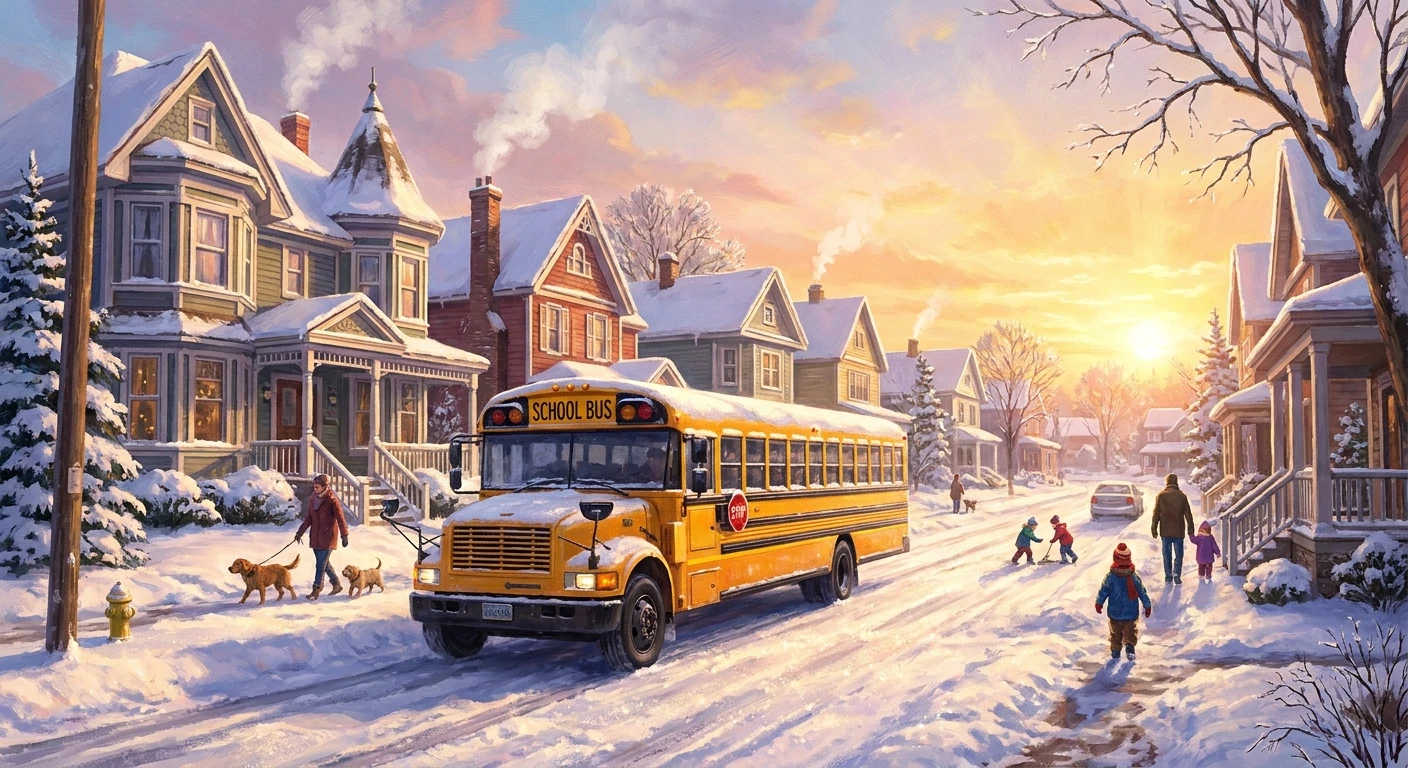
Managing NB School Closures During Unpredictable Weather
Dealing with NB school closures can completely shift your morning routine, especially when sudden winter storms sweep through the province. If you live in New Brunswick, you already know that heavy snowfall, freezing rain, and high winds are just a standard part of the seasonal landscape. When the forecast shifts overnight, the immediate question on every family’s mind is whether the buses will run and the school doors will open. Understanding how district superintendents make these critical calls helps families pivot quickly and keeps everyone safe during severe maritime weather events.
The primary driver behind any operational pause is student and staff safety. Navigating the logistics of a province with massive rural stretches and varied topographies means that weather conditions in one zone might be perfectly clear while another is buried under a foot of snow. The decision-making chain involves meteorologists, transportation managers, and provincial authorities working long before dawn. By grasping the framework of these decisions, parents and guardians can transition from feeling caught off-guard to feeling thoroughly prepared for whatever the Atlantic climate throws their way this winter.
Read also: Guide to NL Schools Closures and Weather; Power Outage London: What to Do When the Lights Go Out.
Understanding District Protocols and Impact
When districts announce schedule changes, they rely on a highly structured matrix of weather thresholds and infrastructure capacities. The province operates through multiple distinct educational zones, including Anglophone and Francophone districts, each managing their own specific fleet of buses and facility maintenance crews. A localized approach means you might see buses canceled in the Anglophone East School District while Francophone South remains fully operational. Families benefit immensely from knowing which exact zone and bus route applies to their household, as this eliminates the confusion of relying on broad, province-wide news broadcasts.
The value proposition of having a clear understanding of these protocols is immense. First, it ensures child safety by preventing kids from waiting at unplowed rural bus stops. Second, it allows working parents to secure contingency childcare plans without a chaotic, last-minute scramble. Consider a scenario where an ice storm hits Charlotte County but spares Moncton; localized alerts ensure the economy and daily life only halt where absolutely necessary.
| Closure Type | Primary Cause | Family Impact |
|---|---|---|
| Full System Shutdown | Severe province-wide blizzards or major infrastructure failure. | Total pivot required; all students remain home for the day. |
| Bus Route Cancellations | Impassable rural backroads or dangerous wind chills. | Schools remain open; parents must transport kids safely if possible. |
| Early Dismissal | Unexpected daytime deterioration of weather conditions. | Mid-day childcare coordination and immediate pickup required. |
To navigate these disruptions smoothly, households should implement a clear action plan:
- Map your specific zone: Identify your exact district, sub-zone, and bus number before the winter season begins.
- Establish communication channels: Download district-specific mobile applications and subscribe to direct SMS or email alert systems.
- Coordinate a community network: Build a reliable circle of neighbors or nearby family members who can share supervision duties when schedules change unexpectedly.
Origins of the Snow Day
The concept of halting education for severe weather has deep roots in Atlantic Canada’s history. Decades ago, rural New Brunswick relied entirely on manual road clearing and rudimentary heating systems in schoolhouses. When massive nor’easters rolled in from the Atlantic, physical travel became impossible, and staying home was a matter of basic survival. In those early days, word of mouth and party-line telephones were the only ways communities knew if the local teacher had made it to the building.
Evolution of Alert Systems
As the province modernized and consolidated smaller educational facilities into larger regional hubs, the transportation network expanded massively. This shift made daily operations heavily dependent on the safety of massive yellow school buses. By the 1980s and 1990s, families would huddle around local AM radio stations starting at 6:00 AM, waiting for the broadcaster to read down a lengthy list of affected districts. The transition from radio broadcasts to the internet era revolutionized this process. District websites became the central hub for updates, although early server crashes during major storms quickly highlighted the need for more robust technological solutions.
Modern State of Winter Logistics
Today, the infrastructure behind operational announcements is highly sophisticated. Communication happens instantaneously through social media platforms, dedicated district phone lines, automated mass-dialing systems, and push notifications. Transportation managers actively track GPS data from snowplows and receive live micro-climate forecasts from Environment Canada. The modern protocol represents a seamless blend of meteorological science, digital communication, and rapid logistical deployment, ensuring that thousands of families receive crucial safety information before they even brew their morning coffee.
The Meteorology Behind the Decisions
Evaluating whether to keep facilities open requires analyzing complex meteorological data rather than just looking at the snow accumulation on a driveway. New Brunswick’s unique geography, bordered by the Bay of Fundy and the Gulf of St. Lawrence, creates volatile weather patterns. Temperature fluctuations can cause rapid freezing, turning wet roads into dangerous sheets of black ice within minutes. Meteorologists provide school boards with predictive models detailing exactly when a weather front will hit, how long it will last, and what the subsequent clearing operations will require.
Transportation and Fleet Logistics
School buses are heavy-duty vehicles that operate under strict mechanical thresholds. When temperatures plummet, the physical mechanics of transporting thousands of students become the primary concern. Fleet managers must evaluate if diesel engines will start reliably, if air brake systems might freeze, and if municipal plows have sufficiently cleared the turning radiuses required for large vehicles on rural routes. If the buses cannot operate safely, the district simply cannot guarantee the secure transport of its student population.
- Wind Chill Factors: Extreme cold can cause frostbite in minutes, making waiting at bus stops a critical health hazard.
- Visibility Limits: High winds combined with light, dry snow create whiteout conditions, drastically reducing driver reaction times.
- Flash Freezing: A sudden drop in temperature following rain creates invisible black ice, making large bus operation incredibly perilous.
- Diesel Fuel Gelling: At extremely low temperatures without proper additives, the fuel in school buses can crystallize, causing engine failure.
Step 1: Set Up Automated Notifications
The very first thing you need to do is automate your information intake. Relying on manually checking websites can lead to delays. Subscribe to the official SMS alerts and email newsletters provided by your specific school district. Follow their verified social media accounts and set them as priority notifications so that an update triggers a loud alert on your device by 6:00 AM.
Step 2: Establish a Childcare Network
Do not wait for the first blizzard to figure out who will watch the kids. Speak with your employer early in the season about remote work flexibility during severe weather events. Form a micro-community with two or three local parents where you rotate supervision duties. If one parent can work from home while another must commute to a hospital or retail job, outline these roles clearly in advance.
Step 3: Stock Up on Emergency Supplies
Severe weather that shuts down transportation routes can also knock out the local power grid. Keep a dedicated storm kit in your home. This should include non-perishable snacks, bottled water, battery-powered lanterns, and fully charged power banks for your digital devices. Knowing you have the basics covered lowers the stress of a sudden schedule shift.
Step 4: Plan Educational Contingencies
While a day off is exciting for students, continuous disruptions can impact their learning momentum. Keep a stash of educational materials, reading books, and offline learning packets ready. Coordinate with teachers during parent-teacher interviews to understand what digital platforms they use so you can facilitate remote learning if the district transitions to online instruction for the day.
Step 5: Test Your Commute Alternatives
If the buses are canceled but the school remains open for those who can get there safely, you must evaluate your own commute. Ensure your personal vehicle is equipped with high-quality winter tires, an emergency roadside kit, and a full tank of gas. Identify the main arterial roads that municipal plows clear first, and avoid taking unmaintained shortcuts through rural backroads.
Step 6: Create a Snow Day Routine
Kids thrive on structure, even during disruptions. Establish a clear routine for unexpected days at home. Set specific times for reading, creative play, outdoor activities (if safe), and screen time. A structured day prevents cabin fever and keeps the household running smoothly while you manage your own remote work or household chores.
Step 7: Review School Board Policies Annually
District boundaries, communication tools, and operational policies update frequently. Set a calendar reminder every September to review the latest weather guidelines from your district’s superintendent. Double-check that your contact information is correct in the student portal, ensuring you never miss a vital early morning automated phone call.
Myths & Reality
Myth: Individual teachers or principals decide if they want to cancel classes for the day.
Reality: The decision rests entirely with the district superintendent, who consults directly with local transportation managers, municipal road crews, and official meteorological services long before dawn.
Myth: If there is no snow on the ground in my neighborhood, the district made a mistake in calling a shutdown.
Reality: Districts cover massive geographic areas. Your street might be bare, but rural backroads in the same zone could be entirely impassable due to localized drifting or flash freezing.
Myth: Online learning has completely eliminated the need for traditional weather-related cancellations.
Reality: While digital learning is a great backup, widespread severe weather often brings power outages and internet disruptions, making equitable remote instruction impossible for many rural families.
FAQ & Conclusion
Where do I find official closure announcements?
Always check your specific district’s official website, their verified social media channels, or local radio stations. Do not rely on unverified community Facebook groups.
What time are morning decisions made?
Superintendents typically aim to make and broadcast the final operational decision between 5:30 AM and 6:00 AM to give families maximum notice.
Do closures affect extra-curricular activities?
Yes. When facilities shut down for the day due to weather, all evening sports, clubs, and community rentals in those buildings are automatically canceled.
How are bus zone delays handled?
Sometimes weather requires a simple delay rather than a cancellation. A one-hour delay means your specific bus will arrive exactly one hour later than its normal scheduled time.
Is there a threshold for cold temperatures?
While there is no single universal temperature, districts typically suspend transportation when wind chill values reach levels that cause frostbite on exposed skin within minutes.
What happens if weather worsens during the day?
If conditions deteriorate rapidly, districts will trigger an early dismissal protocol. They will notify parents immediately to arrange safe mid-day pickups.
Are francophone and anglophone districts synced?
Not always. Because they operate independent bus fleets and cover different geographic footprints, one district might close while the other remains open.
Being proactive about NB school closures transforms a chaotic morning into a manageable, minor pivot. By understanding the rigorous safety protocols, setting up automated alerts, and preparing your household for rapid schedule changes, you ensure your family stays safe and stress-free all winter long. Take ten minutes today to verify your contact details with your district portal and secure your contingency plans before the next major forecast hits!