

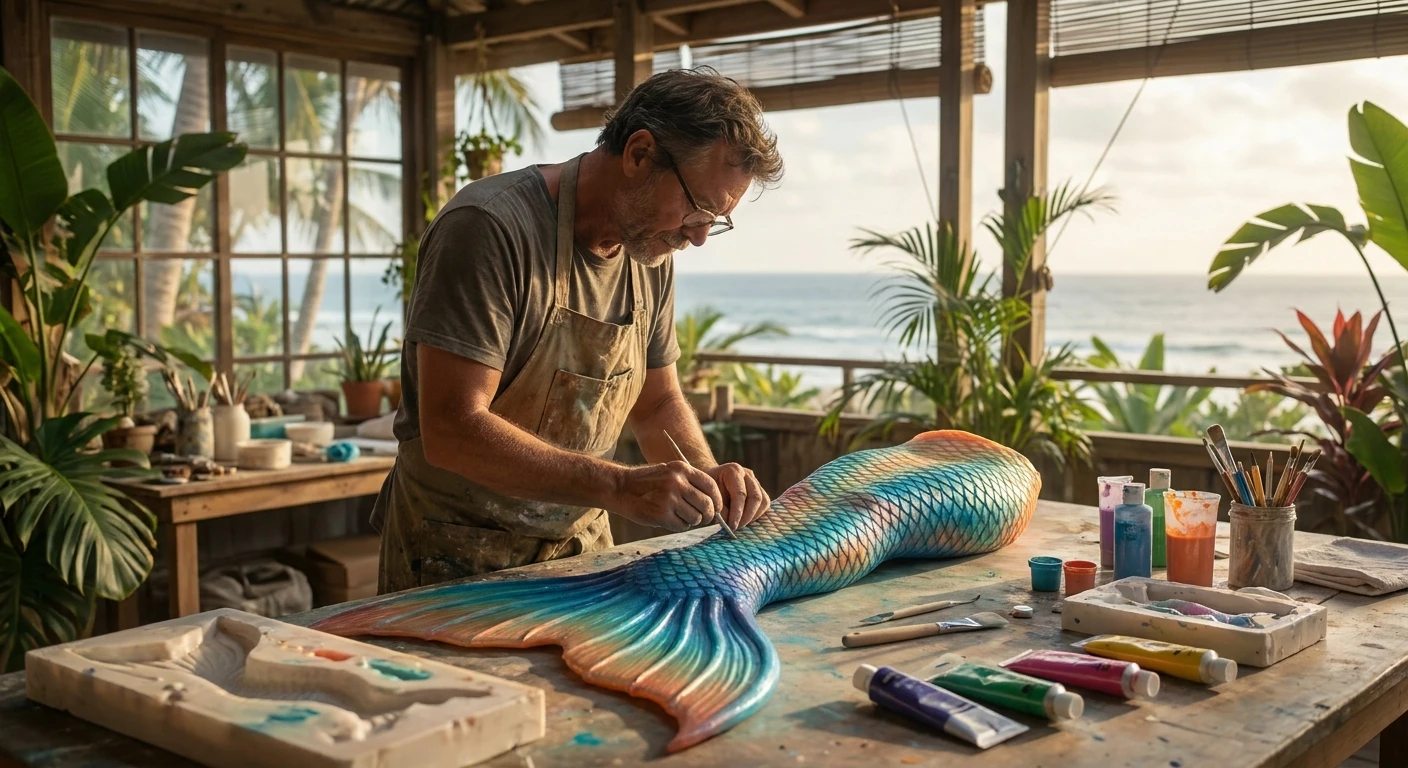
The Magic of Eric Ducharme: Crafting Underwater Dreams
Hey there! If you’ve ever found yourself completely mesmerized by those incredibly realistic mermaid videos popping up all over social media, you absolutely need to know about Eric Ducharme. This guy didn’t just build a cool niche hobby; he practically invented an entire industry from scratch. I remember a few years back, I was standing on the rugged coast of the Black Sea right here in Odesa, Ukraine. The water was freezing, the wind was biting, and my friend pulled out her phone to show me this wildly vibrant, tropical video of a professional mermaid swimming through crystal-clear springs. The sheer contrast between my chilly surroundings and that sun-drenched underwater fantasy hooked me instantly. The mastermind behind that flawless silicone tail was none other than Eric.
It’s wild to think about how one person’s passion can completely reshape how we interact with the water. I’m writing this because I get asked all the time about the mechanics of these hyper-realistic tails and who is actually crazy enough (in the best way possible) to dedicate their life to making them. He turned a childhood obsession with aquatic life and mermaids into a massive business called Mertailor. We are talking about custom-fitted, medical-grade silicone tails that weigh up to 50 pounds on land but glide effortlessly through the water. It’s not just a costume; it’s a wearable piece of high-performance aquatic gear. Let me break down exactly why his work is so legendary, how he actually pulls it off, and maybe even convince you to try slipping into a monofin yourself.
When we talk about the core benefits of what Eric produces, it goes way beyond just looking pretty for an Instagram photoshoot. These tails are heavily engineered pieces of sporting equipment. People use them for intense freediving, underwater choreography, and serious core fitness routines. The value proposition of a Mertailor creation is pretty straightforward: unmatched realism, incredible durability, and a custom fit that prevents the drag and slipping you get with cheap fabric knockoffs. For example, professional underwater performers at massive aquariums rely on his silicone tails because they withstand constant exposure to saltwater and chlorine without losing their vibrant pigmentation. Another example is the film industry; directors prefer his creations because they look like genuine biological appendages on camera, reacting naturally to the water currents.
To give you a better idea of how his gear stacks up against the rest of the market, I put together a quick breakdown of what you typically find out there:
| Material Type | Durability & Lifespan | Best Used For |
|---|---|---|
| Spandex/Fabric | Low (Fades and tears over time) | Beginners, kids, casual pool days |
| Neoprene Hybrid | Medium (Good stretch, decent thickness) | Intermediate swimmers, cold water |
| Platinum-Cured Silicone | Extremely High (Years of heavy use) | Professionals, freedivers, film shoots |
If you are lucky enough to get your hands on one of these custom pieces, you can’t just toss it in the closet when you’re done swimming. Here is exactly what you need to do to keep it pristine:
- Thorough Freshwater Rinse: Always wash away chlorine, salt, and pool chemicals immediately after your swim to protect the silicone matrix.
- Proper Drying: Never leave it baking in direct sunlight. Dry it flat in a cool, shaded area to prevent the colors from dulling and the material from warping.
- Correct Storage: Store the tail flat or on a specially designed drying rack. Hanging it by the fluke can cause stretching and micro-tears near the fin insert.
The Early Origins
You can’t really grasp the impact of this guy without knowing where it all started. His fascination didn’t begin as a savvy business plan; it started as a pure, unfiltered childhood dream. Growing up near the crystal-clear springs of Florida, he was surrounded by water culture. By the time he was just a little kid, he was already cutting up garbage bags and duct tape to tape his legs together so he could swim like a mermaid. Most kids grow out of phases like that, but he leaned in hard. He started sewing his own fabric tails, studying how fish moved, and putting on impromptu shows. It was this raw passion that caught the attention of the famous Weeki Wachee Springs mermaids, who basically adopted him as their unofficial mascot and student.
The Evolution of a Craft
As he hit his teenage years, the duct tape and fabric weren’t cutting it anymore. He wanted realism. He began experimenting with latex and eventually moved on to complex mold-making techniques using silicone. He formally launched his company, Mertailor, while most kids his age were just worrying about getting their driver’s licenses. The evolution of his craft was rapid. He figured out how to sculpt individual scales by hand, cast massive molds, and inject them with colors that mimicked the iridescent shimmer of real tropical fish. He even appeared on television shows, which catapulted his niche hobby into the mainstream eye. Suddenly, it wasn’t just him making tails in his backyard; he had a growing team and a massive backlog of orders from all over the world.
The Modern State
Now that we are deep into 2026, the Mertailor operation is absolutely staggering. He isn’t just operating a workshop anymore; he runs a massive aquatic facility. It includes a public aquarium where people can come watch professional mermaids perform in massive tanks wearing his latest creations. The production process has been streamlined, but the core artistry remains untouched. Every premium silicone tail is still custom-painted, meaning no two tails in the world are exactly alike. He’s managed to build a brand that balances massive commercial success with deeply personal, handcrafted artistry. It’s genuinely inspiring to see how far a childhood dream can stretch when backed by relentless work ethic.
The Chemistry of Silicone
Let’s get a bit technical because the materials used here are wild. Making a tail that looks alive underwater requires specific chemical properties. Eric utilizes a specialized, medical-grade, platinum-cured silicone. In simple terms, platinum-cured silicone uses a platinum complex as a catalyst during the curing process. This means there are no weird by-products, no shrinkage over time, and the material is completely skin-safe and hypoallergenic. When the liquid silicone is poured into the mold, it has to be vacuum-degassed. This pulls all the microscopic air bubbles out of the liquid. If you don’t do this, the tail would have tiny weak spots that could tear under the immense pressure of underwater swimming. It’s basically industrial chemistry tailored for fantasy.
Hydrodynamics and Buoyancy
Swimming with your legs bound together in a 40-pound silicone tube sounds like a drowning hazard, but it’s actually an exercise in fluid dynamics. The tails are designed to be neutrally buoyant. This means they don’t drag you to the bottom, nor do they float you to the top like a cork. Inside the massive tail fluke is a high-performance carbon fiber or polymer monofin. This acts as an engine. When you perform the dolphin kick, the blade flexes and snaps back, generating massive forward thrust. The smooth silicone exterior heavily reduces water resistance, allowing the swimmer to glide with incredible efficiency.
- Drag Coefficient: The seamless nature of the molded silicone significantly lowers the drag coefficient compared to loose fabric, mimicking the biological skin of marine mammals.
- Elasticity: The specific durometer (hardness) of the silicone allows for a 30% stretch, accommodating muscle expansion during heavy kicking without restricting blood flow.
- Energy Transfer: A rigid internal monofin pocket ensures that 100% of the kinetic energy from your hips and legs is transferred directly out to the tip of the fluke.
Day 1: Choosing Your First Tail
Alright, so you are ready to take the plunge. Day one is all about picking the right gear. Don’t jump straight into a $3,000 custom silicone rig. Start with one of the high-quality fabric tails with a solid monofin. Look for something snug around the waist so it doesn’t slip when you are in the water. Get familiar with how the fabric feels and make sure the fin fits your feet tightly without causing blisters.
Day 2: Mastering the Monofin
Before you even put the skin on, just take the bare monofin to the pool. Sit on the edge and practice the motion. The power doesn’t come from your knees; it comes entirely from your core and hips. It’s a rolling, undulating motion—exactly like how a dolphin swims. Spend a solid hour just doing laps with the monofin alone to build up that specific muscle memory.
Day 3: Breath Holding Basics
Since you are going to be underwater, you need to work on your breath hold. I’m not saying you need to be an extreme freediver right away, but you need confidence. Start on land. Sit on your couch, take a deep breath in from your stomach (not your chest), hold it for 30 seconds, and slowly exhale. Practice this “box breathing” technique to lower your heart rate and get comfortable with the sensation of holding your breath.
Day 4: Core Strength Training
Mermaiding is an extreme core workout. If your abs and lower back aren’t engaged, you won’t move anywhere. Dedicate day four to a dry-land workout. Planks, leg raises, and flutter kicks are your best friends here. You need to strengthen your abdominal wall because undulating through the water creates serious resistance that your core has to fight against.
Day 5: Pool Practice
Time to put it all together. Head to a shallow pool with a buddy. Slip into the full tail right at the edge of the water—never try to walk or hop in it. Slide in and practice swimming in the shallow end where you can easily stand up if you lose your balance. Focus on smooth, fluid motions rather than speed. Look at how gracefully Eric swims in his videos; it’s all about control.
Day 6: Open Water Safety
If you feel confident in the pool, you might want to try a lake or the ocean. Open water is a completely different beast. You have currents, varying temperatures, and unpredictable depths to deal with. Always, and I mean always, swim with a spotter who isn’t wearing a tail. Make sure your tail has a quick-release feature so you can kick out of it instantly if you get a cramp or get caught in a current.
Day 7: Joining the Community
You’ve got the skills, now find your pod! The mermaiding community is massive and incredibly welcoming. Look up local groups on social media, attend mermaid conventions, or just start posting your underwater progress. Connecting with others will give you tips on tricks, underwater modeling, and how to maintain your expensive gear.
There is a lot of misinformation out there about this lifestyle, so let’s clear the air on a few things.
Myth: Mermaiding is just a silly dress-up game for little kids.
Reality: While kids love it, the professional scene is dominated by adult athletes. It is a recognized subset of freediving and a highly demanding aquatic sport that requires massive physical endurance.
Myth: Silicone tails are a drowning hazard because they are too heavy.
Reality: Yes, they are heavy on land, but silicone is neutrally buoyant in the water. You feel weightless. The real danger only comes if you panic and forget how to do the dolphin kick.
Myth: You can’t see or breathe properly wearing all that gear.
Reality: Swimmers use clear goggles or specialized techniques to see, and breathing is just standard freediving breath-hold techniques. You are completely in control at all times.
Myth: It’s purely an aesthetic hobby with no health benefits.
Reality: It is one of the most intense full-body cardiovascular and core workouts you can possibly do. It heavily tones your legs, glutes, and abs.
How much does a custom tail cost?
A full custom silicone tail can range anywhere from $2,500 to over $5,000 depending on the complexity of the paint job and the type of fins attached.
How long does it take to make one?
Because they are hand-sculpted, poured, and painted, the waitlist can be anywhere from a few months to over a year.
Can guys wear them too?
Absolutely! The term is “merman,” and there is a massive community of guys who swim professionally and casually.
Do I need to be a good swimmer first?
Yes. You should be an incredibly strong, confident traditional swimmer before binding your legs together in a tail.
Does Eric still make the tails himself?
While he has a full production team now, Eric is still heavily involved in the design, sculpting, and quality control of the silicone tails.
Can I use a tail in the ocean?
Yes, but you must be acutely aware of ocean currents and always swim with a dedicated safety buddy.
Where is Mertailor located?
The main facility and the public aquarium are located in Lecanto, Florida.
How do I travel with a heavy silicone tail?
Most performers use heavy-duty hard shell suitcases or custom travel bags to protect the silicone from being crushed on airplanes.
So, there you have it! The fascinating world of Eric Ducharme and the intense engineering behind the mermaid craze. It’s a perfect blend of childhood imagination and high-level craftsmanship. If you’ve been on the fence about trying it out, take this as your sign. Grab a beginner fabric tail, hit the local pool, and see how it feels to glide through the water like a completely different species. Who knows, maybe I’ll see you flipping your fins off the coast of Odesa someday! Get out there and start swimming!