

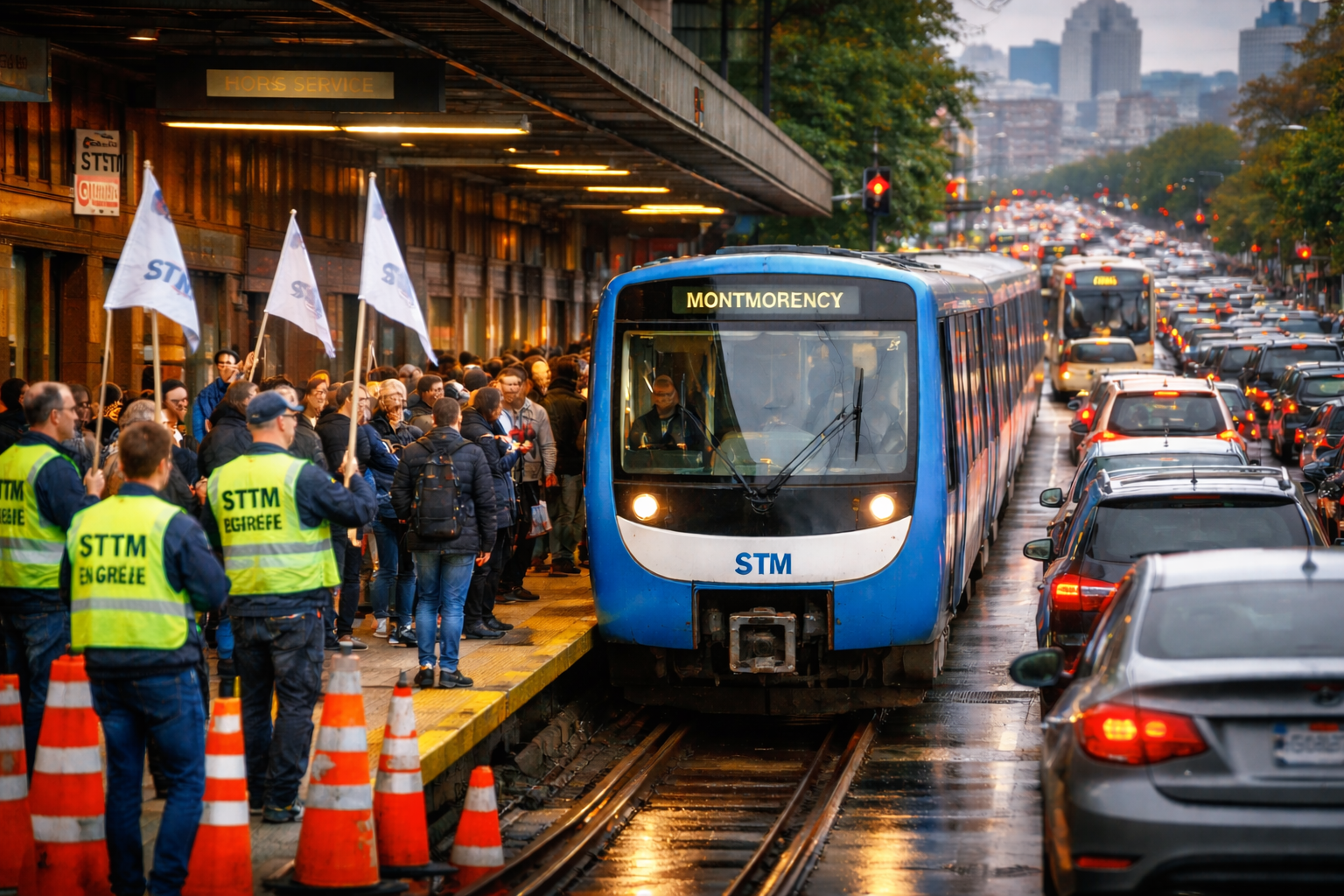
If you live in Montreal, you know the rhythm of the city often moves with the métro. Early morning commuters stepping onto platforms, buses pulling away from crowded stops, the familiar rumble of trains under downtown streets. Public transit is not just a service here. It’s the bloodstream of daily life.
That’s what makes the STM strike such a major topic in Montreal. It’s not simply a labour dispute. It’s a reminder of how tightly urban life is connected to public transportation systems.
Let’s walk through what the strike means, how it affects commuters, and why infrastructure debates in Montreal often circle back to the STM.
What exactly is the STM?
First, a quick refresher. The Société de transport de Montréal, known simply as STM, operates the public transit network across Montreal. That includes buses and the iconic metro system that runs beneath the city.
The system is massive. Millions of trips happen every week, and during peak periods the metro alone carries hundreds of thousands of passengers each day. From downtown workers to university students to tourists exploring Old Montreal, the system connects nearly every part of the island.
And when service stops or slows, the ripple effect spreads quickly.
| Transit Component | Role in Montreal |
|---|---|
| Metro system | Four subway lines connecting major urban centres |
| Bus network | Hundreds of routes linking neighborhoods across the island |
| Daily ridership | Hundreds of thousands of passengers during peak travel periods |
| Main function | Core transportation system for commuting, school, and tourism |
Put simply, STM keeps Montreal moving.
When transit stops, the city feels it
A strike affecting the STM doesn’t just inconvenience a few riders. It changes the rhythm of the entire city. Suddenly streets fill with more cars. Ride-sharing demand spikes. Cycling routes get busier. Some people work from home if they can. Others simply leave earlier and brace for longer travel times.
Think about a typical weekday morning. Someone in Laval heading downtown for work. A student traveling to McGill University. A nurse commuting to a hospital shift before sunrise. Normally those trips rely on the same system.
Remove that system—even partially—and the domino effect begins.
- Road congestion increases across bridges and downtown streets
- Ride-share prices often rise during peak demand
- Commuters shift to bicycles or carpooling
- Work schedules adjust as travel times grow longer
These changes show something many urban planners already know: transit systems quietly support everything around them.
Why labour disputes happen in transit systems
Transit strikes often stem from negotiations between transit authorities and labour unions representing workers such as drivers, maintenance staff, and operations employees.
These workers keep the system running—driving buses, maintaining trains, managing control centres, repairing infrastructure, and supporting passengers across the network.
When contract negotiations stall, strikes can become part of the bargaining process.
And while the headlines usually focus on service disruptions, the deeper issues often involve working conditions, scheduling structures, and wages tied to the demanding nature of transit work.
It’s not unusual for these discussions to stretch over months before reaching a resolution.
The daily reality for Montreal commuters
Ask Montreal commuters what matters most in transit and you’ll usually hear the same words: reliability and predictability.
People build their daily routines around schedules. A metro train arriving every few minutes makes life easier. When that predictability disappears, stress levels climb.
Commuters begin doing mental math every morning.
Should I leave earlier?
Will traffic be worse today?
Is biking faster than driving right now?
These small questions shape the daily experience of living in a major city.
And during a strike, those questions become constant companions.
| Commuter Adjustment | Typical Result |
|---|---|
| Driving instead of transit | Higher traffic congestion |
| Remote work | Reduced downtown commuter volume |
| Cycling | More riders using bike paths |
| Carpooling | Shared travel among coworkers |
Interestingly, many commuters discover temporary alternatives during strikes. But most eventually return to transit once service resumes. That says a lot about the efficiency of the system when it’s running normally.
The infrastructure conversation behind the strike
Whenever a strike affects a major transit network, the conversation quickly expands beyond labour negotiations.
People start talking about infrastructure.
How much should cities invest in public transit?
How resilient should urban transportation systems be?
And what happens when a single system becomes the backbone of mobility for millions?
Montreal has long been considered one of North America’s more transit-friendly cities. Its metro network is efficient, widely used, and integrated into everyday life.
But like any large system, it also faces pressure—from population growth, maintenance needs, and evolving expectations around sustainability.
Transit infrastructure is never static. It’s a living system that needs constant attention.
Montreal’s unique transit culture
One thing that stands out about Montreal is how central public transit is to city identity.
In many North American cities, transit is seen as a secondary option. Something you take when driving isn’t convenient.
Montreal is different.
The metro is fast, frequent, and deeply embedded in the urban layout. Neighborhoods grew around stations. Restaurants, offices, and universities cluster near major stops.
That urban design encourages transit use.
Which is why service disruptions hit harder here than in many other cities.
- Dense neighborhoods encourage public transit use
- Universities rely heavily on metro access
- Downtown offices depend on transit commuting
- Tourism areas connect directly to metro stations
When you put all of that together, the STM isn’t just transportation. It’s urban infrastructure in the broadest sense.
How cities adapt during transit disruptions
Cities are surprisingly adaptive. Even when transit systems slow down or stop temporarily, urban life doesn’t simply freeze.
People improvise.
Bike lanes suddenly feel busier. Walking routes fill up. Local cafés near residential areas see more daytime activity as remote workers stay close to home.
Urban mobility shifts into a kind of temporary patchwork.
That doesn’t mean strikes are easy. Far from it. But they reveal how flexible city life can be when people adjust their habits.
FAQ
What is the STM?
The Société de transport de Montréal operates the city’s metro and bus networks.
Why do STM strikes happen?
They typically occur during labour disputes between transit workers and the transit authority over contracts or working conditions.
Does a strike shut down the entire system?
Not always. Some services may continue depending on the strike structure and legal requirements.
How do commuters adapt during a strike?
Many switch to driving, cycling, carpooling, or remote work arrangements.
Is Montreal heavily dependent on transit?
Yes. Public transit is a major part of daily mobility in the city.
Does traffic increase during transit disruptions?
Typically yes. More commuters rely on cars when buses and metro services are limited.
How long do transit strikes usually last?
The duration varies depending on negotiations between labour unions and transit authorities.
Conclusion
The STM strike reminds Montrealers of something they often take for granted. Public transit isn’t just a convenience—it’s infrastructure that supports the entire rhythm of city life.
When trains run on time and buses arrive as scheduled, the system fades into the background. People move effortlessly between neighborhoods, offices, schools, and restaurants.
But when service stops, the importance of that network becomes impossible to ignore.
Transit strikes can be frustrating. They disrupt routines and stretch travel times. Yet they also highlight the essential role infrastructure plays in modern cities.
And once the trains begin running again, commuters usually return quickly. Because in a city like Montreal, public transit isn’t just transportation.
It’s the pulse of the city.